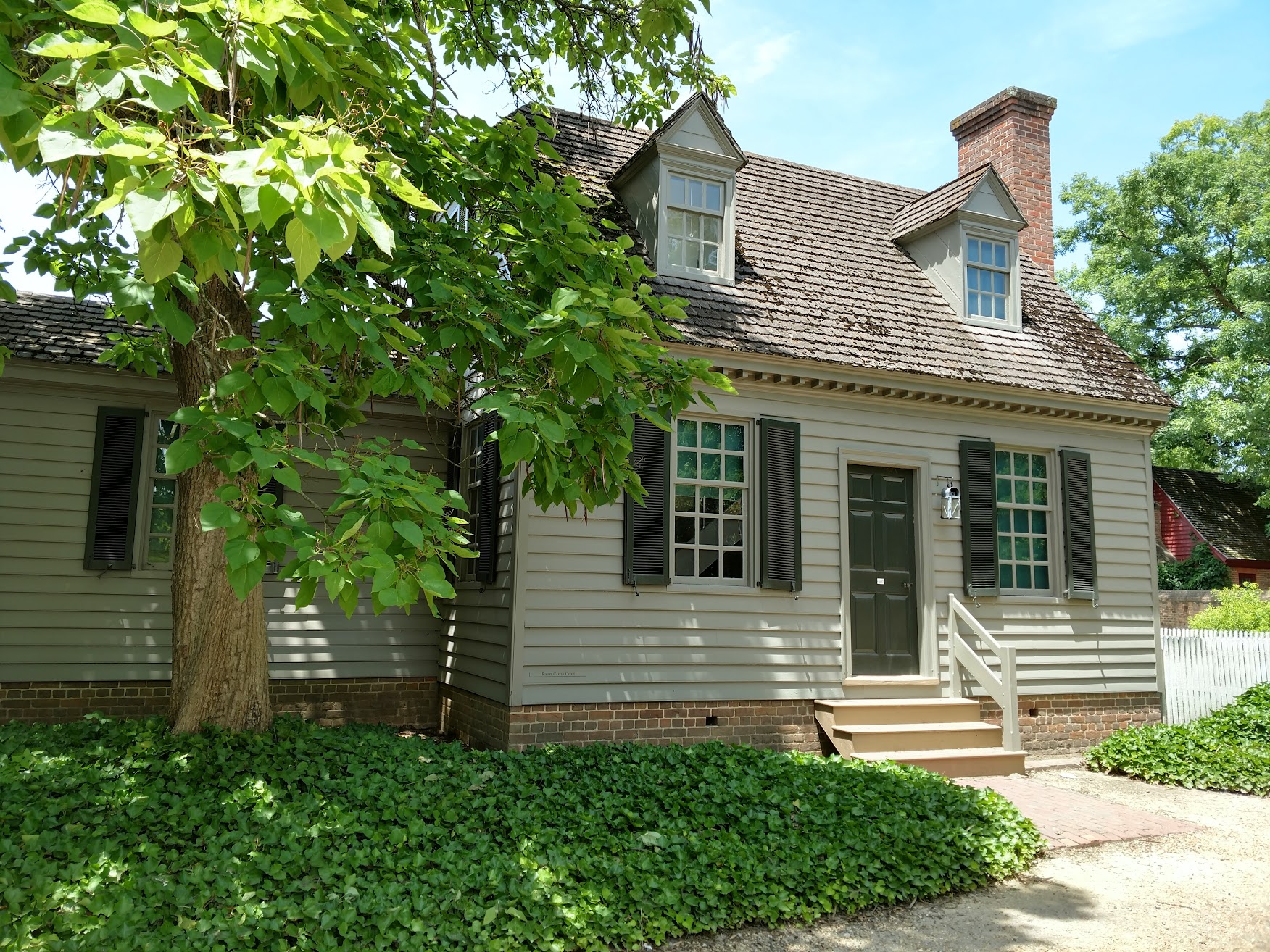
When you think about color in the colonial world, what hues come to mind?
For most of us, it’s probably “earth” or muted colors, things that mimic colors found in nature. And it makes sense that we think of the colonial world as less vibrant than our own–they certainly had fewer chemical plants to create artificial dyes, and the fabrics and paints we have from the 1600-1700s appear more muted, so that must be how things were, right?
Just as black and white (or even early color) photographs don’t accurately depict the colors of the late 19th and early 20th centuries, the fabrics and painted furniture we have from the 18th century don’t look exactly as they did when they were new. Time, sunlight, and environmental exposure often fade colors, so what we see now are muted versions of the original colors. More accurate scientific methods of chemical and color analysis have enabled scientists, historians, and art historians to more closely match the colors of the colonial era, and the results are vibrant.
There is a really interesting collaboration between the Colonial Williamsburg Foundation and the paint company Benjamin Moore to create the Williamsburg Color Collection, a 144 color palette of colors inspired by colonial Williamsburg. Some of these colors match the earthy, muted assumption, like these:

Others are much more vivid, like these:

The more vivid colors tended to be found in wealthy homes, where people had more money to spend on expensive dyes and hues, and even in those homes, the most vibrant colors tended to be in the public areas of the house, where they would impress the most guests. It wouldn’t make sense to waste your money on painting your bedroom fireplace bright green because very few people would see it–you would instead use that money to paint your parlor fireplace, where you would entertain guests and have them turn green with envy over your gorgeous fireplace mantel.
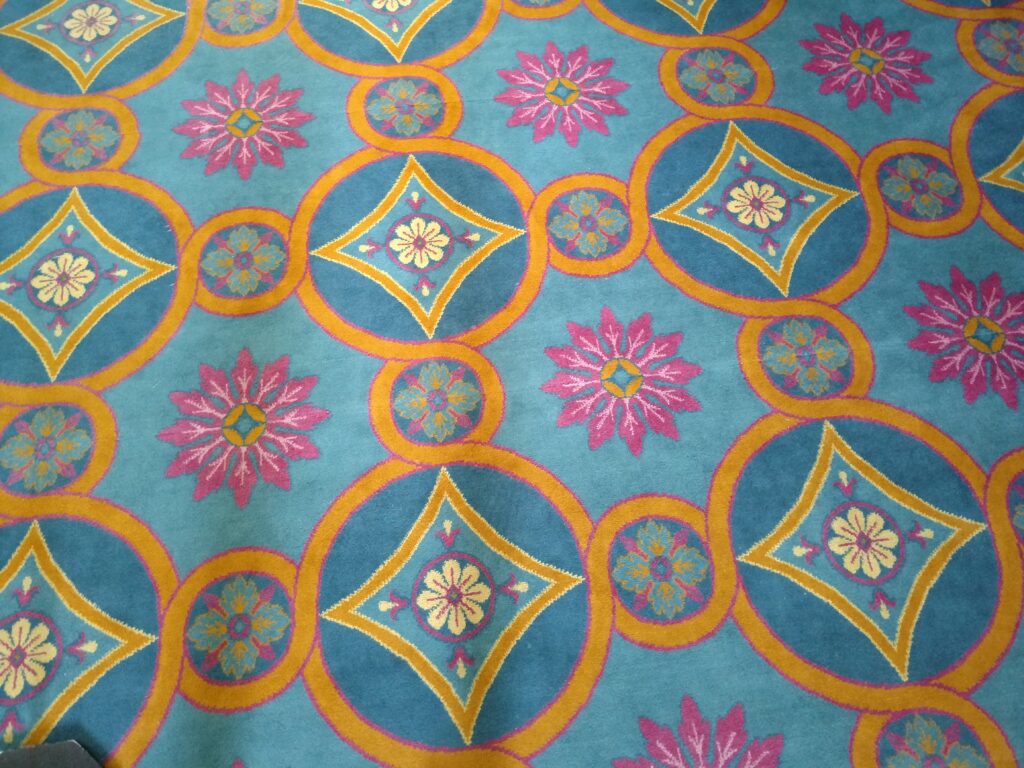
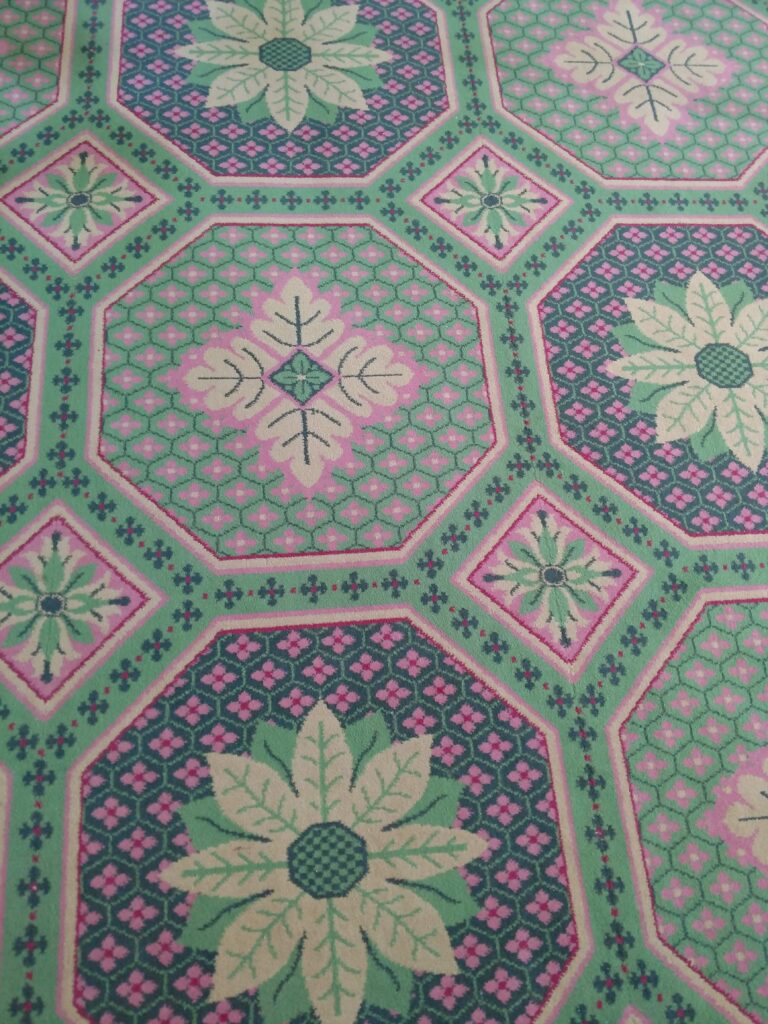
Fabrics could also be vibrant. Two of my favorite examples of bright colors come from carpets in the Governor’s Palace in colonial Williamsburg. Even today, these would be considered eye-catching floor coverings! They were extremely expensive, not just because of their bright colors, but because they were handmade.
For some further reading, check out this article about the surprising colors of the colonial world and this collection of historic colors.
Leave a Reply