Author: jwallace

  • Slavery in Colonial America

    Slavery in Colonial America

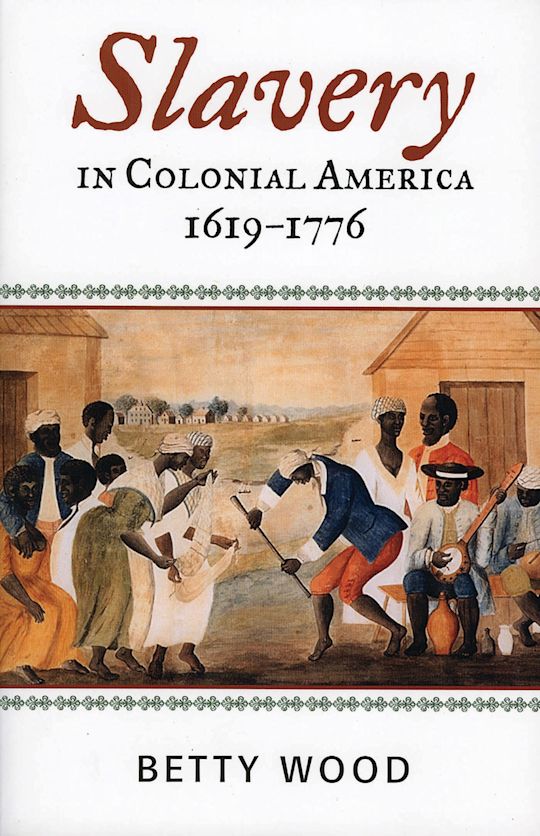
    There are dozens of books on slavery in colonial America, some of which we’ll talk about on this blog. In my opinion, one of the best overviews of the enslavement of Africans and African-Americans in the colonial period is Betty Wood’s Slavery in Colonial America 1619-1776. It is a short book, clocking in at 86 pages of text, which makes it highly readable and easy to assign in classes. Readers get a wealth of information in a concise format, however.

    Wood traces the outlines of American slavery, from its introduction to mainland North American colonies in the early 1600s, the outlines of the Transatlantic slave trade, and efforts to push back against slavery from armed rebellions to arguments in favor of abolition.

    One of the real strengths of Wood’s work is her foucs on the lived experiences of enslaved peoples, and how those varied by region. She breaks down, for instance, the differences between tobacco plantations in the Chesapeake and rice plantations in the Carolinas, showing that slavery functioned in very different ways. In the Chesapeake, slaves worked in gangs for set (daylight) hours. In South Carolina, slaves operated on a task system, which potentially allowed for free time after the day’s set of tasks had been completed. She examines what the potential extra hours and slightly more autonomy allowed slaves on rice plantations to do, from growing gardens and earning extra money. Likewise, she breaks down how slaves in urban environments were employed in a wide variety of tasks, from domestic labor and working on docks to highly skilled trades like blacksmithing. Finally, she examines the small but significant impact of enslaved people in the Northern colonies, which are often overlooked in discussions of American slavery. Since the demands for labor were not as extreme as those in the Chesapeake or Southern colonies, there was less economic need for enslaved or even indentured labor, so most slaves in the Northern colonies worked in urban environments or on small farms. Wood unpacks what these regional patterns meant for things like language retention, cultural practices, religious conversion, and even marriage–finding a spouse in the Northern colonies, for instance, was often more daunting and difficult due to the smaller “dating pool” than in a colony like South Carolina with its thousands of enslaved people living in close proximity to each other.

    While she highlights regional differences and variations in how slavery functioned, and how male and female slaves had different challenges and experiences, Wood is also careful to remind readers that colonial American slavery relied on harsh physical punishment (or the threat of it), and the exploitation of African and African-American labor, regardless of how much perceived opportunity a slave might have had in comparison to others. She walks the fine line between portraying slaves as either victims in a brutally exploitative system or as full of agency in making their own choices and fighting back against the institution of slavery. Instead, she presents the range of challenges, hardships, options, and choices that colonial slaves experienced, discussing difficult topics with sensitivity.

    Wood’s book also has great value in its appendices and attached primary documents, which further enlighten readers on the range of experiences colonial American slaves faced. At 20 years years since its publication, it is still a very solid introduction to colonial American slavery, and as a plus, it is also pretty readily available at both university and public libraries!
  • Colonial Newspaper Advertisements

    Colonial Newspaper Advertisements

    I recently came across a fantastic online resource called The Adverts 250: An Exploration of Advertising During the Era of the American Revolution, 250 Years Ago This Week. It does pretty much what the title suggests–each day, the site’s authors spotlight an advertisement from a colonial newspaper from 250 years ago that day, with an image of the digitized newspaper advertisement and an explanation of its contents and historical context.

    This is an excellent way to see what types of things were advertised in colonial newspapers, because it shows us not just what items or services were being bought and sold, but also gives us a lot of information about practices like slavery, since many of these advertisements focused on runaway slaves. Indeed, each day, there is a separate post capturing the slave advertisements found in newspapers for that date–here’s the one from August 30, the day I wrote this pot. As the short essay in the post reminds us, these advertisements showed up in colonial newspapers nearly every day, reminding us that the buying, selling, and attempted recapture of human beings was a part of colonial people’s daily realities. The first image on this post is especially jarring, as it lists a teenage boy for sale, but “Also a Horse and Chair.”

    Credit to The Adverts 250 Project. You can find the original post at: https://adverts250project.org/2025/08/30/slavery-advertisements-published-august-30-1775/

    I’m writing this on August 30, 2025, so the advertisement spotlighted today can be found here. In it, an unnamed rider advertises his postal service runin the Pennsyvlania Journal, especially wishing to find customers of the newspaper that he’s advertising in. He promises to deliver their newspaper with all the latest news in the swiftest fashion, as well as any letters. It’s a great look at the fledgling postal service in the American colonies, which was largely privatized and subscription-based. It’s also a good look at how entrepreneurial individuals established and advertised their businesses, especially in cities like Philadelphia. Much of the advertisement is a list of 23 names in 16 eastern Pennsyvlania towns on his proposed route, telling prospective customers where they might leave their names and pick up their newspapers and other mail like religious and political pamphlets (increasingly important in 1775, as hostilities between England and the American colonies heated up). In the absence of established post offices, inns and other businesses served as stopping points for this mail carrier, or “rider.”

    The site has been active since 2016, and each year, they add a new year of newspaper advertisements (so 2016’s year focused on 1766). This is a massive collaborative effort that brings a wealth of historical primary sources to a broader audience–especially students! Undergraduate students are involved in the creation and updating of the site, as well, making it a great example of a large scale, collaborative digital humanities project.

    For more resources, check out:

    Jack Lynch, “‘Sold on Reasonable Terms’: Early American Newspaper Advertisements.”Colonial Williamsburg. https://research.colonialwilliamsburg.org/Foundation/journal/Autumn10/ads.cfm

    “News in Colonial America” (part of a series on The News Media and the Making of America, 1730-1865), American Antiquarian Society. https://collections.americanantiquarian.org/earlyamericannewsmedia/exhibits/show/news-in-colonial-america

  • George Burroughs

    George Burroughs

    One of the classes I get to teach every few years is a course on the Salem Witch Trials, which I really enjoy because it allows us to spend a whole semester really digging into one historical event from a lot of different perspectives and historical interpretations. There are many fascinating people associated with the trials, and one that always catches my attention is George Burroughs, because he doesn’t match the typical profile of a suspected witch yet he was still executed, even though he was living about a hundred miles away when the trials began. Today I’m sharing a short biography of him.

    George Burroughs was the second minister to serve in Salem Village’s church. He was from a wealthy family in Suffolk County, England, and he seems to have grown up in Roxbury, Massachusetts, though it’s not known when his family moved to America. After he graduated Harvard University in 1670 at 18 years old, he became a minister in Falmouth, Maine. The community disbanded following Indian attacks during King Philip’s War, causing Burroughs to move back to Salisbury, Massachusetts. He was appointed minister of Salem Village’s parish a
    few years later in 1680. Though he initially took the parish with the intention of mediating an ongoing town feud, he had a troubled tenure as minister; by 1683, he had stopped meeting his congregation and prepared to move back to Maine amidst arguments and discontent with his congregation over his salary and other matters. He was even arrested for debt in May 1683 before he left Salem for Maine.

    On April 21, 1692, Abigail Williams accused Burroughs of not only being a witch, but of masterminding the entire witch outbreak. Court officials went to Wells, Maine to bring him back as a prisoner to face trial in May 1692. Burroughs was jailed in Boston during most of May-July, 1692, finally coming to indictment and trial on August 12. Nearly all of the afflicted girls accused Burroughs, fainting when seeing
    him in court. Witnesses from Maine and Salem alike came to testify to Burroughs’ leading role in the witch crisis. A short but physically powerful man, Burroughs had survived Indian attacks and life on the frontier in Maine, and was well known for his boasts, intimidating stares, and feats of great physical strength, like carrying a whole barrel of cider over his head and lifting a ten pound flintlock with one finger. These characteristics were all presented as evidence of his involvement with the supernatural, as were criticisms that he had not baptized his youngest children or even attended church for some time. Many scholars today believe he had become a Baptist.

    Most convincing to the judges in his case was the testimony of Ann Putnam, Jr. and Mercy Lewis. Ann claimed that the specters of Burroughs’ two deceased wives visited her and told how he had murdered them. Young Ann’s accusations mirrored those of his second wife’s family, who believed that more than the harsh Maine
    climate had contributed to their relative’s death. Mercy Lewis, who had briefly lived with the Burroughs family when her own parents died in an Indian attack in 1689, provided the most detailed evidence of Burroughs’ witchcraft, stating that he tried to trick her into signing the devil’s book and a few days later, carried her to a high mountain, showed her all the kingdoms of the world, and promised her wealth and power if she wrote in his book; if she refused, he would throw her off the mountain and break her neck (echoing the devil’s temptation of Christ in Matthew 4:8). The entire Putnam family (except Joseph Putnam) joined in depositions against Burroughs, saying they believed the girls’ testimony.


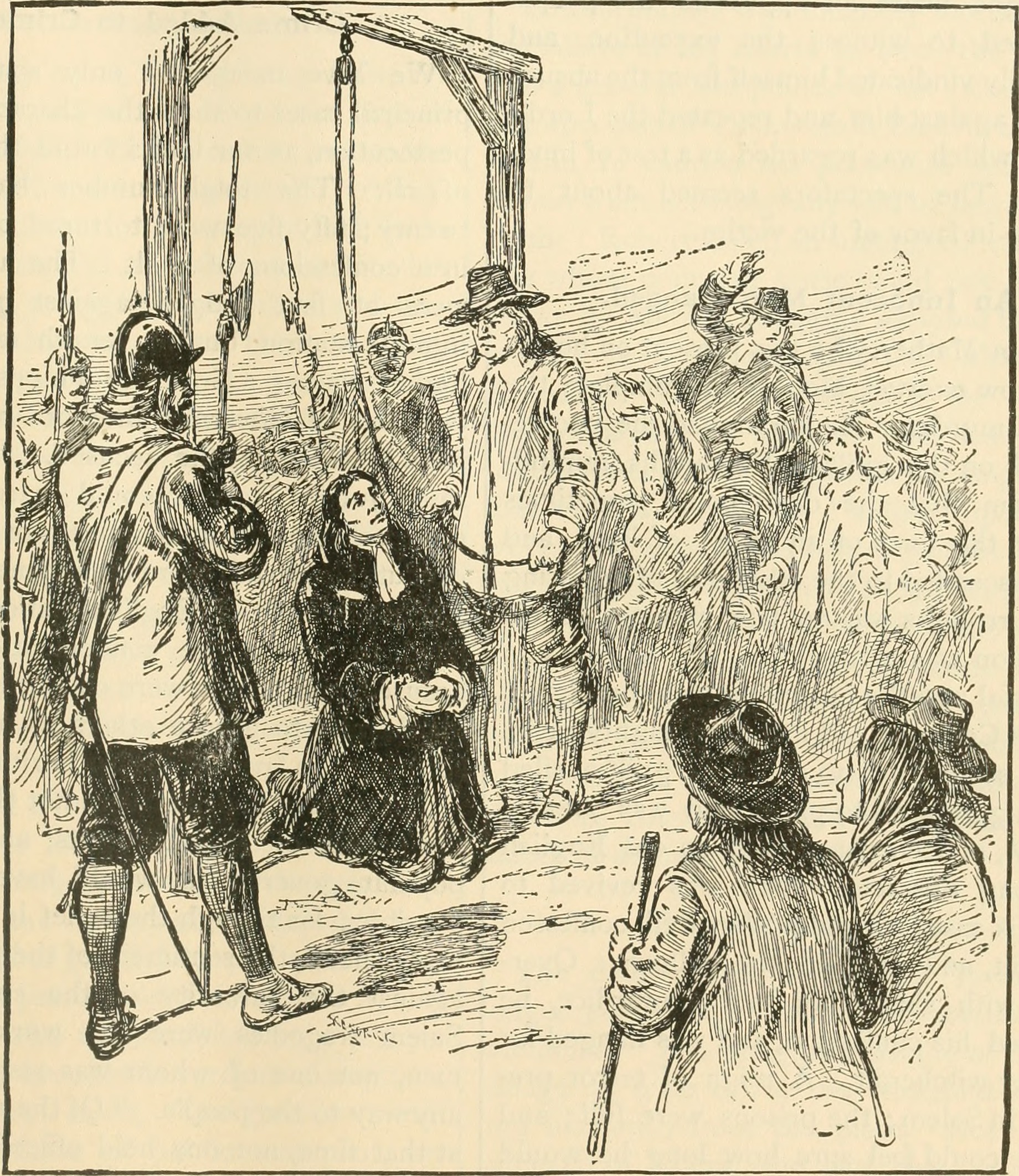
    On August 19, 1692, George Burroughs went to the gallows protesting his innocence and reciting the Lord’s Prayer. Folklore stated that witches were unable to pray the words of Christ, so Burroughs’ prayer unsettled the crowd. Reverend Cotton Mather was instrumental in ensuring that the sentence given in court be carried out. The day after his execution, an accuser and confessed witch, Margaret Jacobs, recanted her testimony, writing to the judges that she had lied and Burroughs and her own grandfather, George Jacobs, Sr., were dead as a result. She claimed to be afraid of the afflicted girls and deeply regretted giving false evidence in order to save her own life and liberty. Her recanting, as well as that of other confessed witches, gave Mather and other Puritan ministers pause and eventually helped bring an end to the trials. George Burroughs’ children, though, were still filing petitions into the 1750s to try to clear his name and restore his property.


    Sources used:

    • Paul Boyer and Stephen Nissenbaum, Salem Possessed: The Social Origins of Witchcraft (New York: MJF Books, 1974), xvii, 6, 8, 12-13, 17, 32, 54-56.
    • Peter Charles Hoffer, The Salem Witchtrials: A Legal History (Lawrence: University Press of Kansas, 1997), 109, 113-119, 136.
    • Carol Karlsen, The Devil in the Shape of a Woman: Witchcraft in Colonial New England (New York: W.W. Norton & Co., 1998), 38, 49, 241, 245-246.

    For some primary documents that focus on the trial of George Burroughs, see the collection of case files about George Burroughs at The Salem Witch Trials Documentary Archive Transcription Project.

  • Color in the Colonial World

    Color in the Colonial World

    When you think about color in the colonial world, what hues come to mind?

    For most of us, it’s probably “earth” or muted colors, things that mimic colors found in nature. And it makes sense that we think of the colonial world as less vibrant than our own–they certainly had fewer chemical plants to create artificial dyes, and the fabrics and paints we have from the 1600-1700s appear more muted, so that must be how things were, right?

    Just as black and white (or even early color) photographs don’t accurately depict the colors of the late 19th and early 20th centuries, the fabrics and painted furniture we have from the 18th century don’t look exactly as they did when they were new. Time, sunlight, and environmental exposure often fade colors, so what we see now are muted versions of the original colors. More accurate scientific methods of chemical and color analysis have enabled scientists, historians, and art historians to more closely match the colors of the colonial era, and the results are vibrant.

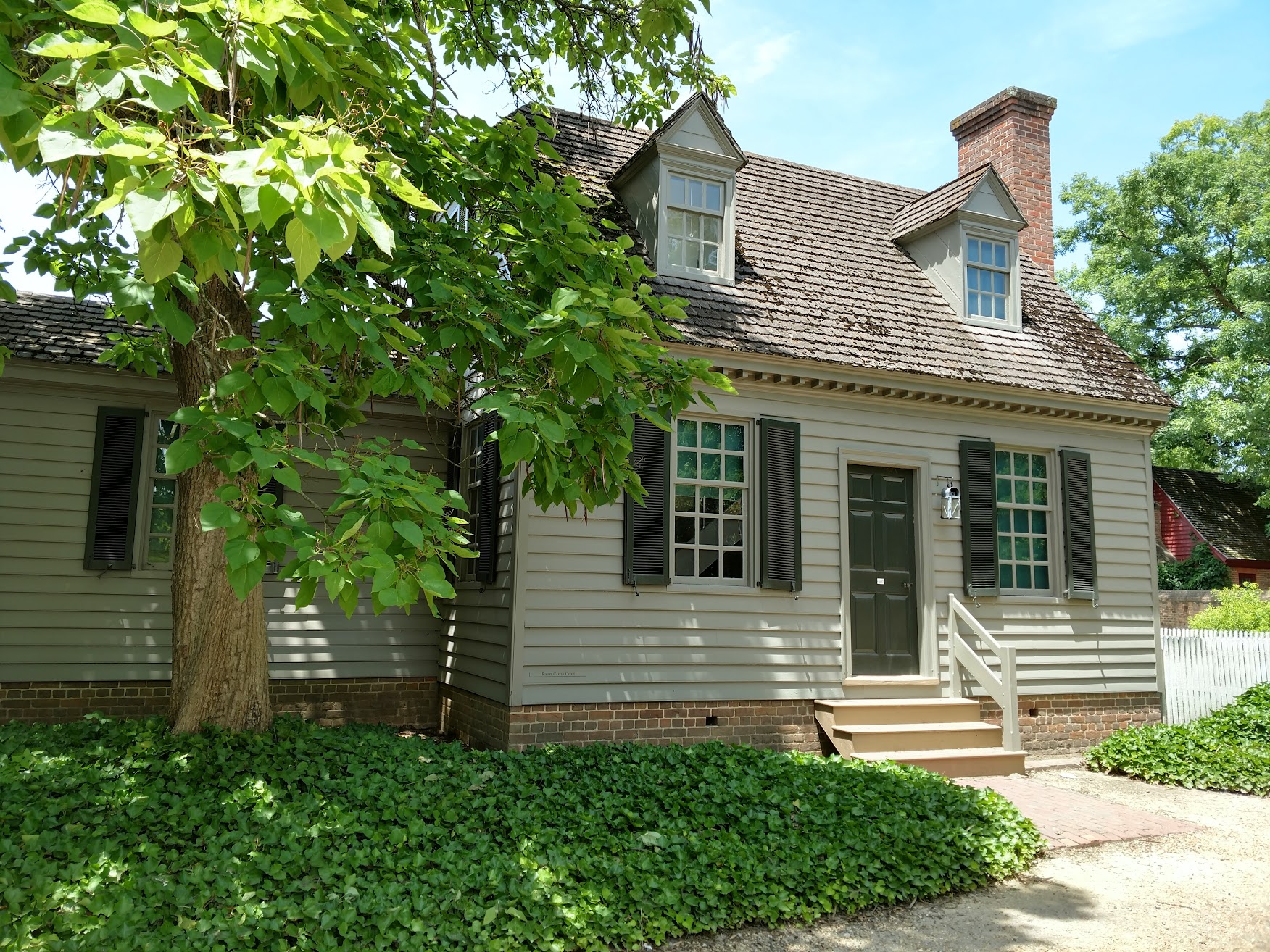
    There is a really interesting collaboration between the Colonial Williamsburg Foundation and the paint company Benjamin Moore to create the Williamsburg Color Collection, a 144 color palette of colors inspired by colonial Williamsburg. Some of these colors match the earthy, muted assumption, like these:

    Benjamin Moore colonial Williamsburg colors

    Others are much more vivid, like these:

    Colonial Williamsburg colors

    The more vivid colors tended to be found in wealthy homes, where people had more money to spend on expensive dyes and hues, and even in those homes, the most vibrant colors tended to be in the public areas of the house, where they would impress the most guests. It wouldn’t make sense to waste your money on painting your bedroom fireplace bright green because very few people would see it–you would instead use that money to paint your parlor fireplace, where you would entertain guests and have them turn green with envy over your gorgeous fireplace mantel.

    Fabrics could also be vibrant. Two of my favorite examples of bright colors come from carpets in the Governor’s Palace in colonial Williamsburg. Even today, these would be considered eye-catching floor coverings! They were extremely expensive, not just because of their bright colors, but because they were handmade.

    For some further reading, check out this article about the surprising colors of the colonial world and this collection of historic colors.

  • How Do You Become a Professor?

    How Do You Become a Professor?

    A question that our history majors often ask is, “How can I have your job?” What they often mean is, “How can I become a professor?” and (whether they realize it or not, “What is it like being a professor?”

    I’ll tell you what I tell them–it takes a combination of hard work, love of reading, researching, teaching, and writing, and luck. There are thousands of incredibly smart, exceptionally qualified people who have earned a Ph.D. in history and never get a full-time job as a professor. There is a major element of luck in who ends up with any particular job, and I think it’s important for students interested in being a professor to know that from the outset. There are unfortunately no guarantees that things will end up the way you want.

    We’ll break this series up into a few parts, since it’s a long process from college to professor–at least 5 years of post-graduate education, and for most people, at least 6-8. For me, it was 6 years of graduate school at The Ohio State University.

    First step: Graduate School

    The first step towards becoming a college professor is to attend graduate school! You can earn an M.A. first and then apply to a Ph.D. program, or apply to a Ph.D. program directly from undergrad–in most cases, you’ll earn a Master’s degree along the way. You typically spend 2-3 years earning a Master’s degree. You’ll take classes that are more specialized and intensive than undergraduate courses, read more books and journal articles, and write a longer research paper than you have before. In college, a 10 page research paper might be standard in an upper level class. In a master’s level class, it might be 15-20 pages for each class! For students interested in going on to earn a Ph.D., they should plan on writing a master’s thesis, which is a longer paper of original research. These can range from 50-100+ pages. Often, a master’s thesis is the beginning of a Ph.D. dissertation, which is a book-length project.

    After a Master’s degree, you move into the exam phase of graduate school. Like in college, you have a major field of study, and typically have several minors or concentrations. My major field was Early American history, which at my graduate school was everything prior to 1877. My minor fields were Atlantic World history (the study of how Africa, the Americas, and Europe interacted with each other during the 1500s-1800s) and Native American history. You have intense exams in each of these fields, based on a massive reading list of 50-100 books for each of your minor fields and 100-200+ books for your major field. I took a written exam and an oral exam. The written exams were answering 3 questions in 20 pages in 48 hours for the major fields, and answering 2 questions in 10 pages in 24 hours for each of the minor fields. The oral exam was 2 hours of 4 professors asking whatever questions they wanted about what you had written and the books you had read. If it sounds intimidating, it really is! The point, though, is to ensure that you have broad knowledge of each of the fields you are teaching and doing research in. And as my advisor told me before hand, we want you to get to the point where you say, “I don’t know the answer. But I would probably start trying to find it here.” No historian knows everything, and for most of us, the constant learning is a huge part of what we love about what we do! But knowing enough to have an idea of what reputable sources you can turn to for information is also a big part of being able to teach.

    Once you finish those exams, you are now ABD–all requirements for the Ph.D. are finished except for that dissertation (All But Dissertation). Minor detail, right? You have to write a 200+ page book. This can take a year or two, depending on how much research you’ve already done on your chosen topic in the earlier years of graduate school, or it can take a lifetime. Many people get to ABD but never finish the Ph.D. for a variety of reasons.

    We’ll talk about the dissertation phase of grad school next time!

  • Guess the Animal

    Guess the Animal

    I think it’s really easy for us in the 21st century to look back at the colonial period and forget most of the people who lived through it were experiencing tremendous changes to their lifestyles, homes, diets, and surroundings. Moving from Europe or Africa to the Americas was a huge shift in the types of plants and animals you saw, the foods that readily grew, and the types of homes you might build. American Indian inhabitants also experienced massive changes as newcomers arrived, with new diseases, animals, foods, lifestyles, and religions.

    In the classroom, one of the ways I like to illustrate just how different everything was for colonial peoples is to show my students this description of an animal from Samuel Purchas, a 1600s British clergyman and prolific chronicler of other peoples’ travels:

    Samuel Purchas, Purchas His Pilgrimage, 2nd ed. p. 732. Quoted in Karen Ordahl Kupperman, Pocahontas and the English Boys: Caught between Cultures in Early Virginia (New York: New York University Press, 2019), p.83.

    Any guesses? I’ll give you a few hints. This is a real animal, and one that is still very much alive and common across the Southeast today. All of my students from Georgia have absolutely seen this animal, typically at least once a year.

    Were you close? This description doesn’t immediately bring the animal they’re talking about to mind (at least it didn’t for me!), and I think that’s kind of the point. European colonists were trying to make sense of their new world, and when they saw new animals, they tried to describe them based on animals they were already familiar with–whether that was size, physical features, or other attributes. It’s one of the things I find most fascinating about the colonial era–everyone was dealing with new, strange things and trying to make sense of them.

  • The Good Forest

    The Good Forest

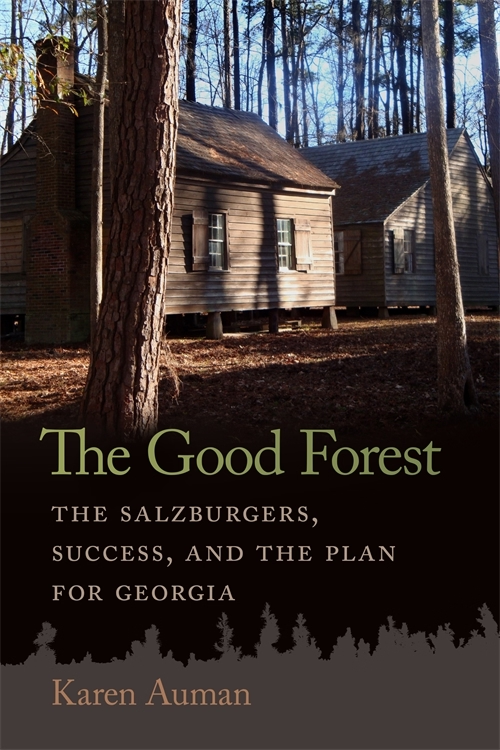
    Cover image of The Good Forest

    One of the most fascinating books I’ve read recently was Karen Auman’s The Good Forest: The Salzburgers, Success, and the Plan for Georgia. I chose this book as the first to spotlight on the blog for a few reasons: it’s a recent publication, and it’s about the colony/state that I live and teach in! As a non-native of Georgia, I’m always interested in learning more about the history of that state, and Auman’s book gave a great look at an often-overlooked group of people who colonized Georgia–the Salzburgers.

    The Salzburgers were a group of Protestants from what is now Germany, who experienced substantial religious persecution. They moved around Europe, and a small group of Salzburgers eventually made their way to the new colony of Georgia, which was created as an experimental colony especially for those whom founder James Oglethorpe identified as the “worthy poor.” Oglethorpe and other initial trustees of Georgia envisioned their colony as a place where those who were down-on-their-luck through no fault of their own could be given a second chance to once again be productive members of society. This would include debtors (maybe you owed money because you lost your job due to illness or injury, or maybe your family lost their home because of the death of your father and husband, the main provider for you), and it also included refugees fleeing religious persecution, like the Salzburgers. We tend to talk about British colonists, but the Georgia Trustees spent a lot of time and money on the Salzburgers, arguing that they were actually better examples of the hardworking, “worthy poor” than most of their British peers! Their hard work and economic success were also held up as evidence for why Georgia did not need slaves, and why the institution of slavery would actually be harmful to the Georgia moral and social experiment.

    Auman traces the communities (like Ebenezer, GA) built by these German colonists, their connections back to Europe (including the many religious aid societies that funded their colonial towns!), and their tensions with British Georgians, who often resented the financial aid and praise the Salzburgers received from Georgia Trustees and other groups in England. Her book is a fascinating look at a minority group of colonists in Georgia and the ways that they interacted with Georgia leadership and the ideals of Georgia’s founding while also creating their own communities and identities as German Georgians.

  • Welcome!

    Welcome!

    Welcome to the Colonial Americas blog! I’m excited to explore the people, events, and histories of the 1500s-1700s with you!

    I’ll post bi-weekly about a topic that I’ve been reading and researching about. Sometimes that will be a book I recommend. Sometimes it will be a topic that comes up in class, or a question I’ve gotten. Sometimes it will be a spotlight on a historic site. And sometimes, it will be something I just find interesting and want to talk about! I love the colonial era and am always finding new and interesting people and events to learn more about.

    If you want to submit a question, please contact me!