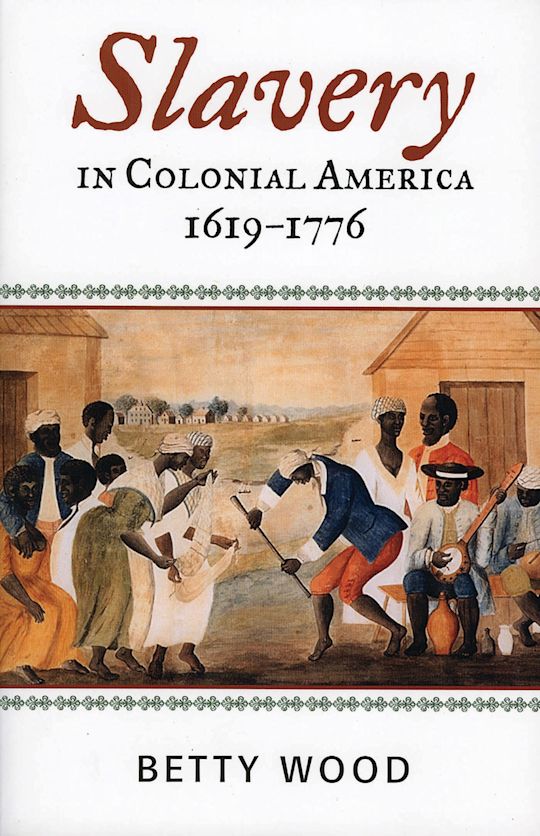
There are dozens of books on slavery in colonial America, some of which we’ll talk about on this blog. In my opinion, one of the best overviews of the enslavement of Africans and African-Americans in the colonial period is Betty Wood’s Slavery in Colonial America 1619-1776. It is a short book, clocking in at 86 pages of text, which makes it highly readable and easy to assign in classes. Readers get a wealth of information in a concise format, however.
Wood traces the outlines of American slavery, from its introduction to mainland North American colonies in the early 1600s, the outlines of the Transatlantic slave trade, and efforts to push back against slavery from armed rebellions to arguments in favor of abolition.
One of the real strengths of Wood’s work is her foucs on the lived experiences of enslaved peoples, and how those varied by region. She breaks down, for instance, the differences between tobacco plantations in the Chesapeake and rice plantations in the Carolinas, showing that slavery functioned in very different ways. In the Chesapeake, slaves worked in gangs for set (daylight) hours. In South Carolina, slaves operated on a task system, which potentially allowed for free time after the day’s set of tasks had been completed. She examines what the potential extra hours and slightly more autonomy allowed slaves on rice plantations to do, from growing gardens and earning extra money. Likewise, she breaks down how slaves in urban environments were employed in a wide variety of tasks, from domestic labor and working on docks to highly skilled trades like blacksmithing. Finally, she examines the small but significant impact of enslaved people in the Northern colonies, which are often overlooked in discussions of American slavery. Since the demands for labor were not as extreme as those in the Chesapeake or Southern colonies, there was less economic need for enslaved or even indentured labor, so most slaves in the Northern colonies worked in urban environments or on small farms. Wood unpacks what these regional patterns meant for things like language retention, cultural practices, religious conversion, and even marriage–finding a spouse in the Northern colonies, for instance, was often more daunting and difficult due to the smaller “dating pool” than in a colony like South Carolina with its thousands of enslaved people living in close proximity to each other.
While she highlights regional differences and variations in how slavery functioned, and how male and female slaves had different challenges and experiences, Wood is also careful to remind readers that colonial American slavery relied on harsh physical punishment (or the threat of it), and the exploitation of African and African-American labor, regardless of how much perceived opportunity a slave might have had in comparison to others. She walks the fine line between portraying slaves as either victims in a brutally exploitative system or as full of agency in making their own choices and fighting back against the institution of slavery. Instead, she presents the range of challenges, hardships, options, and choices that colonial slaves experienced, discussing difficult topics with sensitivity.
Wood’s book also has great value in its appendices and attached primary documents, which further enlighten readers on the range of experiences colonial American slaves faced. At 20 years years since its publication, it is still a very solid introduction to colonial American slavery, and as a plus, it is also pretty readily available at both university and public libraries!