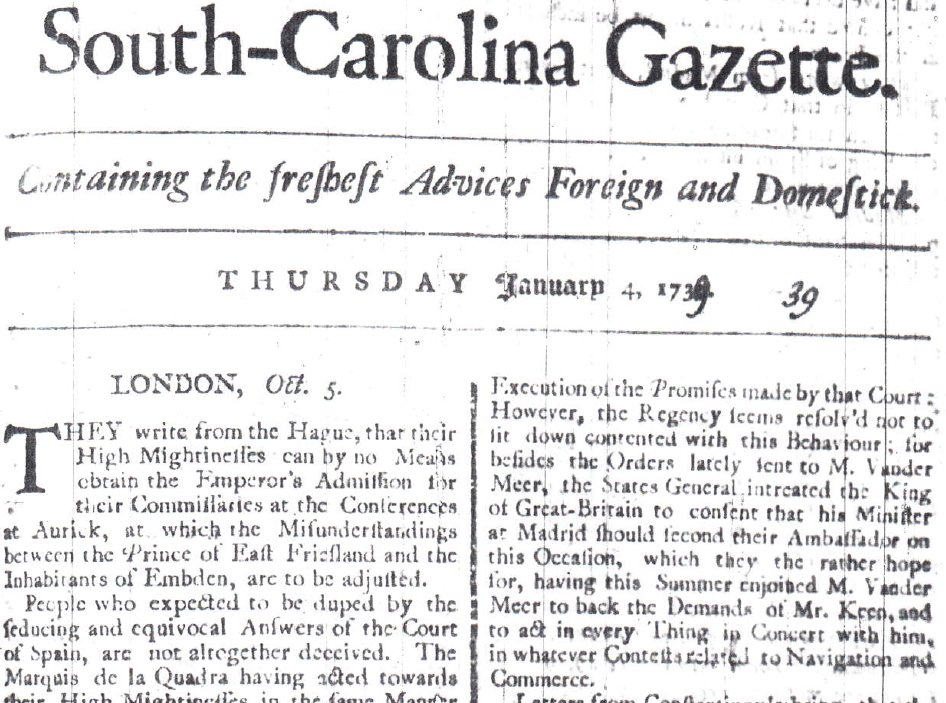
I recently came across a fantastic online resource called The Adverts 250: An Exploration of Advertising During the Era of the American Revolution, 250 Years Ago This Week. It does pretty much what the title suggests–each day, the site’s authors spotlight an advertisement from a colonial newspaper from 250 years ago that day, with an image of the digitized newspaper advertisement and an explanation of its contents and historical context.
This is an excellent way to see what types of things were advertised in colonial newspapers, because it shows us not just what items or services were being bought and sold, but also gives us a lot of information about practices like slavery, since many of these advertisements focused on runaway slaves. Indeed, each day, there is a separate post capturing the slave advertisements found in newspapers for that date–here’s the one from August 30, the day I wrote this pot. As the short essay in the post reminds us, these advertisements showed up in colonial newspapers nearly every day, reminding us that the buying, selling, and attempted recapture of human beings was a part of colonial people’s daily realities. The first image on this post is especially jarring, as it lists a teenage boy for sale, but “Also a Horse and Chair.”
I’m writing this on August 30, 2025, so the advertisement spotlighted today can be found here. In it, an unnamed rider advertises his postal service runin the Pennsyvlania Journal, especially wishing to find customers of the newspaper that he’s advertising in. He promises to deliver their newspaper with all the latest news in the swiftest fashion, as well as any letters. It’s a great look at the fledgling postal service in the American colonies, which was largely privatized and subscription-based. It’s also a good look at how entrepreneurial individuals established and advertised their businesses, especially in cities like Philadelphia. Much of the advertisement is a list of 23 names in 16 eastern Pennsyvlania towns on his proposed route, telling prospective customers where they might leave their names and pick up their newspapers and other mail like religious and political pamphlets (increasingly important in 1775, as hostilities between England and the American colonies heated up). In the absence of established post offices, inns and other businesses served as stopping points for this mail carrier, or “rider.”
The site has been active since 2016, and each year, they add a new year of newspaper advertisements (so 2016’s year focused on 1766). This is a massive collaborative effort that brings a wealth of historical primary sources to a broader audience–especially students! Undergraduate students are involved in the creation and updating of the site, as well, making it a great example of a large scale, collaborative digital humanities project.
For more resources, check out:
Jack Lynch, “‘Sold on Reasonable Terms’: Early American Newspaper Advertisements.”Colonial Williamsburg. https://research.colonialwilliamsburg.org/Foundation/journal/Autumn10/ads.cfm
“News in Colonial America” (part of a series on The News Media and the Making of America, 1730-1865), American Antiquarian Society. https://collections.americanantiquarian.org/earlyamericannewsmedia/exhibits/show/news-in-colonial-america